

Fabian Braesemann
Principal Investigator
Dr Fabian Braesemann is a Departmental Research Lecturer in AI & Work at the OII.
Principal Investigator
Dr Fabian Braesemann is a Departmental Research Lecturer in AI & Work at the OII.

Research Assistant
Paul is a research assistant in business informatics, focused on data analytics, programming, and social theory. He explores the intersection of technology, society, and economic behaviour.
Postdoctoral Visiting Research Fellow
Ole an affiliated guest researcher at the Copenhagen Center for Social Data Science and is co-founder of the DWG Data Science Company.

External Collaborator
Otto Kässi is a labour economist with a background in econometrics. His research concentrates on empirical study of online labour markets.

Visiting Research Student
Marc-Antoine studies how technological change shapes markets, workers, firms, and policy using large-scale text analysis.
Visiting Research Student
Jonathan is a final-year MSc student based in Berlin. Alongside his studies, he has gained practical experience in the areas of AI enterprise adoption and running startup ecosystems.
By Ole Teutloff, Johanna Einsiedler, Otto Kässi, Fabian Braesemann, Pamela Mishkin and R. Maria del Rio-Chanona
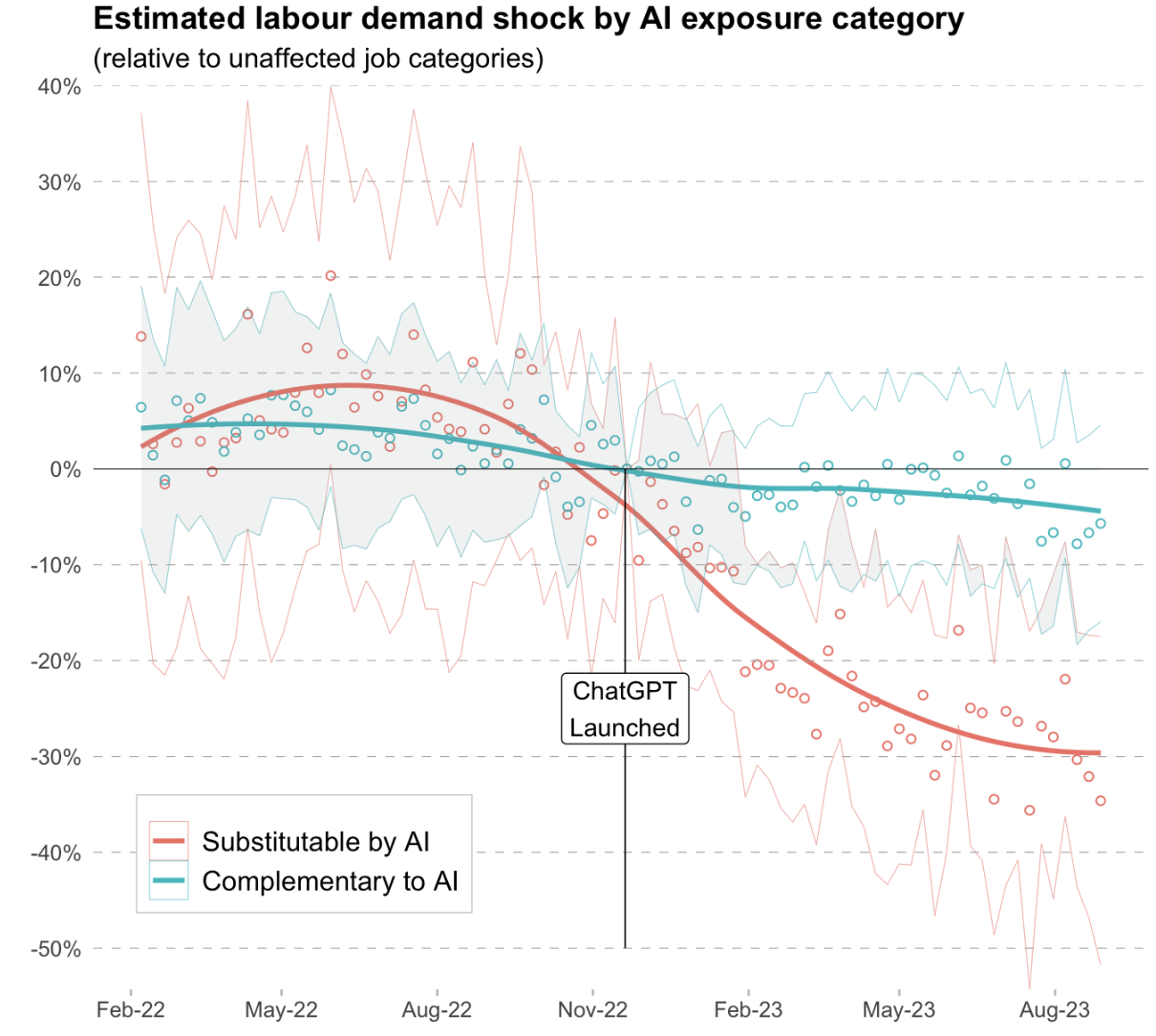
ChatGPT reduced demand for substitutable freelance skills like writing, while increasing demand for AI-complementary skills such as machine learning and chatbot development.

By Fabian Braesemann, Fabian Stephany, Ole Teutloff, Otto Kässi, Mark Graham, Vili Lehdonvirta
Remote work connects global labour markets but remains highly unequal, concentrating in skilled workers, major cities, and a few regions while many rural and Global South areas lag behind.

By Fabian Braesemann, Vili Lehdonvirta, Otto Kässi
Online labour platforms help rural workers access high-skilled remote jobs, though the most isolated regions still benefit far less from these opportunities.

By Maik Hesse, Fabian Braesemann, David Dann and Timm Teubner
Platforms with higher social interaction rely more on expressive trust cues, and users value different trust mechanisms depending on the platform context.